
CES Vestamager, Periode 2 og 3
It has been an eventful week as we had to complete both ringing sessions 2 and 3 within a few days. I had to move the 2nd ringing session due to a rainy weather forecast, and it ended up very close to the next session; therefore, I have compiled a recap of both days in this email, so get ready for a long one… 🙃
2nd ringing session – May 19th
The list of participants was shaken up, and the team ended up being Oscar, Eirini, Alba, and me. We had a pretty chill morning that was completed without any haste and with a couple of longer breaks in the morning sun. We had 18 birds in total. The day was special in the sense that we caught more recaptures than birds without rings. The recaptures were a good mix of both phyls, tits, and pipits.
All of the birds except a blue tit could be sexed based on the presence of a cloacal protrusion (CP) in males or eggs in females, and of course, on plumage for the rest.
For those of you who are not aware, CP is a hormone-driven bodily characteristic in male birds where the cloaca protrudes out from the body in a cylindrical fashion. It is only in the very beginning of the breeding period, when the birds are mating, that this is visible. The males have an easier time delivering semen to females with this protrusion. This makes it possible for us to determine the sex of at least the males of species with no sexual dimorphism (plumage of male and female is different). This has actually made me realize that we have A LOT of male birds in the nets compared to females – take the Willow Warblers as an example; we only caught male birds this ringing session. Of course, this makes sense when you think about what the female birds are (or should be) doing right now – laying eggs or laying on eggs.
We still catch female birds of species without sexual dimorphism, like the Chiffchaff. This session, we had one female where it was clear she had an egg in development, as her lower body was elongated and egg-shaped. At this time in the CES project, it is important to check for the presence of eggs in female birds, as some of them look like they are about to pop very soon – these I prefer to handle as quickly and carefully as possible, preferably by a rather experienced ringer.
| CES Vestamager | 19-05-2026 | |
| Species | Recaptured | Ringed |
| Blåmejse (Blue Tit) | 1 | |
| Gransanger (Chiffchaff) | 1 | 1 |
| Halemejse (Long-tailed Tit) | 1 | 1 |
| Løvsanger (Willow Warbler) | 5 | 1 |
| Musvit (Great Tit) | 2 | |
| Skovpiber (Tree Pipit) | 2 | 1 |
| Solsort (Blackbird) | 1 | |
| Tornsanger (Common Whitethroat) | 1 | |
| Total | 11 | 7 |
| Total | 18 | |
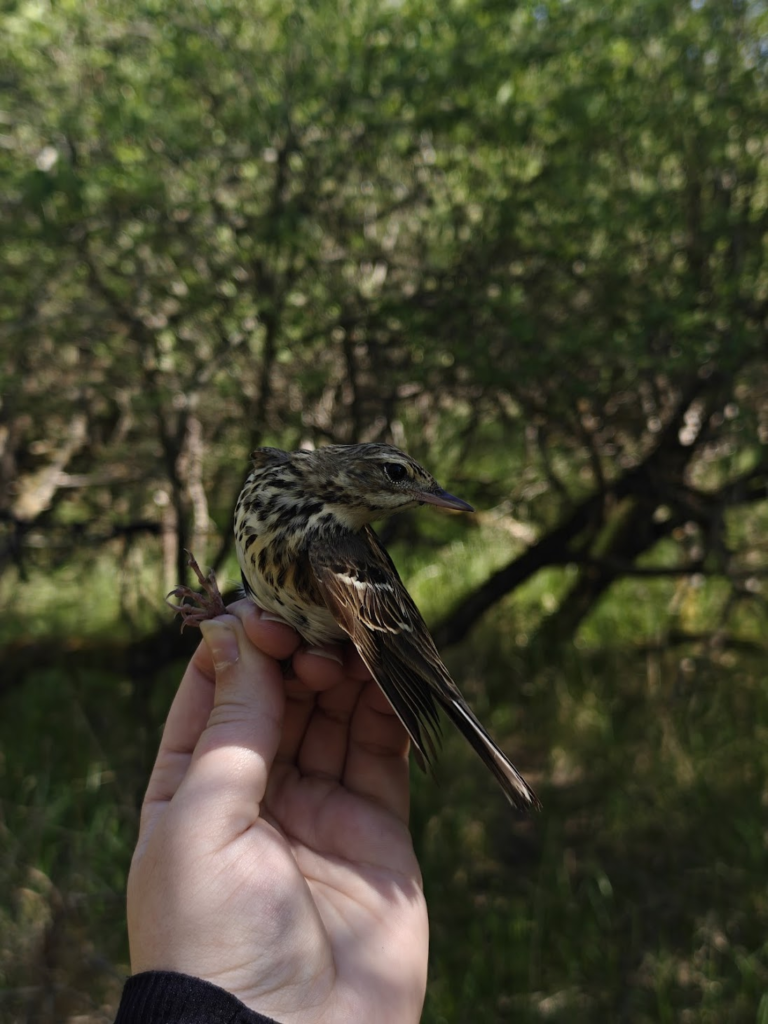
Tree pipit, 3k+ male
3rd ringing session – May 22nd
On Friday we had the pleasure of hosting the annual ringing session for students from University of Copenhagen attending the course ‘Danish Fauna’. Here they have to learn about a lot of common Danish bird species, as well as getting to know their basic biology (i.e. migration strategy). We use the ringing site to (hopefully) present them with some live birds and for them to train what they have learned in class. It was a great turnout, and I had help from Kasper, Alba and Anne Hermanns.
This day was also one for the history books! Not because of the total number of birds, which ended up being a solid 21, but because we had a whopping 12 different species! Yes, we had a good diversity of common CES Vestamager species (willows, chiffs, tits, whithroats and pipits) but luckily we also had some pretty huge gems for the students.
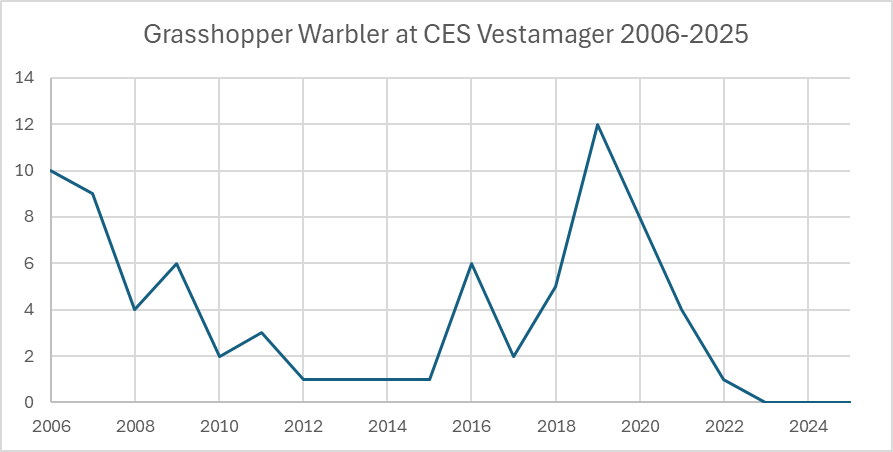
I am not gonna save the best for last, because it was actually the first gem of the day – a Grasshopper Warbler! I was SO happy to catch this bird again at the site, as we have not done so since 2022! This species has been much more common on Kalvebod Fælled and Amager Fælled but numbers are dwindling, although with a sudden peak in 2019:
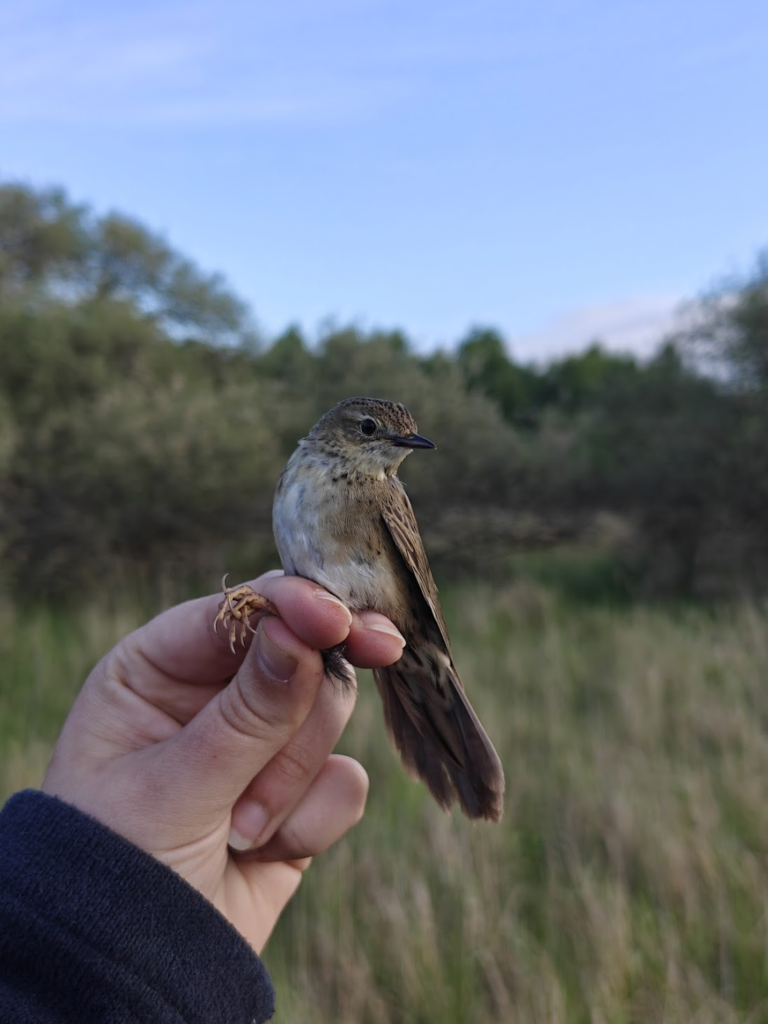
Grasshopper warbler, 2k+, first in four years!
However, the day was not done giving – the next round gave us a few more surprises. The first one being an adult male Great Spotted Woodpecker which is always a great bird to show an audience. He was of course pecking at us, making his impression as he should.
Further on the round we also had an adult male Red-backed Shrike! These are definitely not yearly for us, there have only been caught 10 individuals in total at CES Vestamager in 20 years. He was very beautiful and very well behaved.
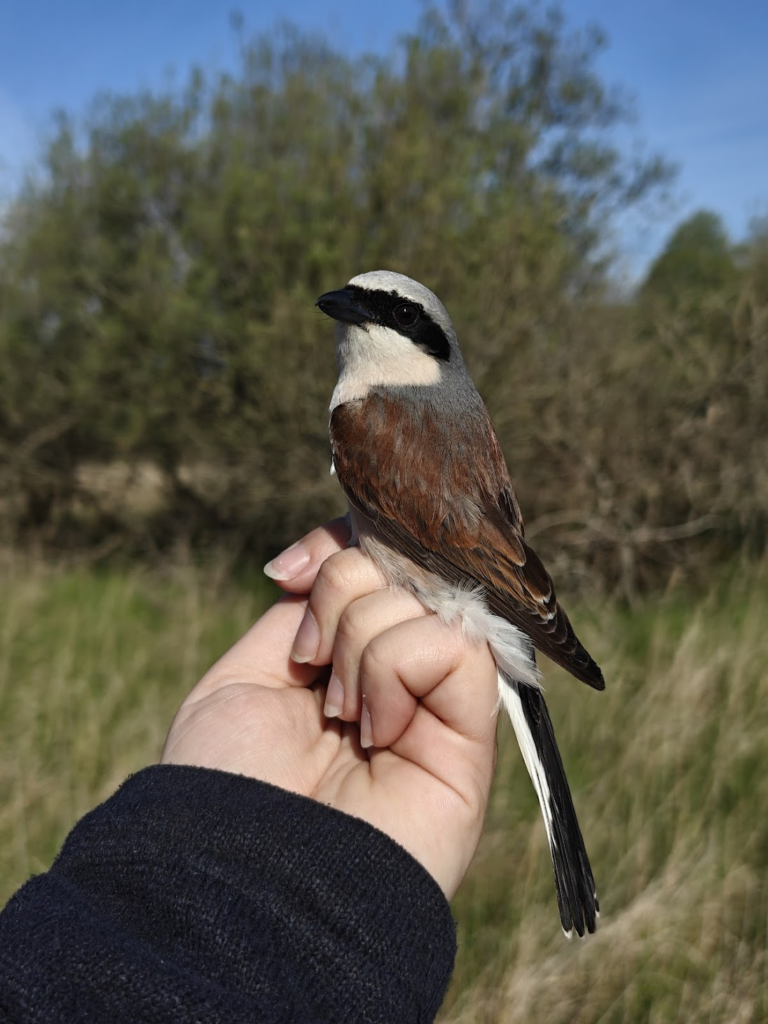
Red-backed Shrike, 2k+ male
After this the students left, and me and Alba completed the last two rounds, where we were blessed with a Pied Flycatcher female. A very extraordinary nice morning and some very lucky students!
| CES Vestamager | 19-05-2026 | |
| Species | Recaptured | Ringed |
| Blåmejse (Blue Tit) | 1 | |
| Broget Fluesnapper (Pied Flycatcher) | 1 | |
| Gransanger (Chiffchaff) | 2 | 1 |
| Græshoppesanger (Grasshopper Warbler) | 1 | |
| Gærdesanger (Lesser Whitethroat) | 1 | |
| Havesanger (Garden Warbler) | 1 | |
| Løvsanger (Willow Warbler) | 4 | 1 |
| Musvit (Great Tit) | 1 | |
| Rødrygget Tornskade (Red-backed Shrike) | 1 | |
| Skovpiber (Tree Pipit) | 1 | |
| Stor Flagspætte (Great Spotted Woodpecker) | 1 | |
| Tornsanger (Common Whitethroat) | 4 | |
| Total | 8 | 13 |
| Total | 21 | |
